



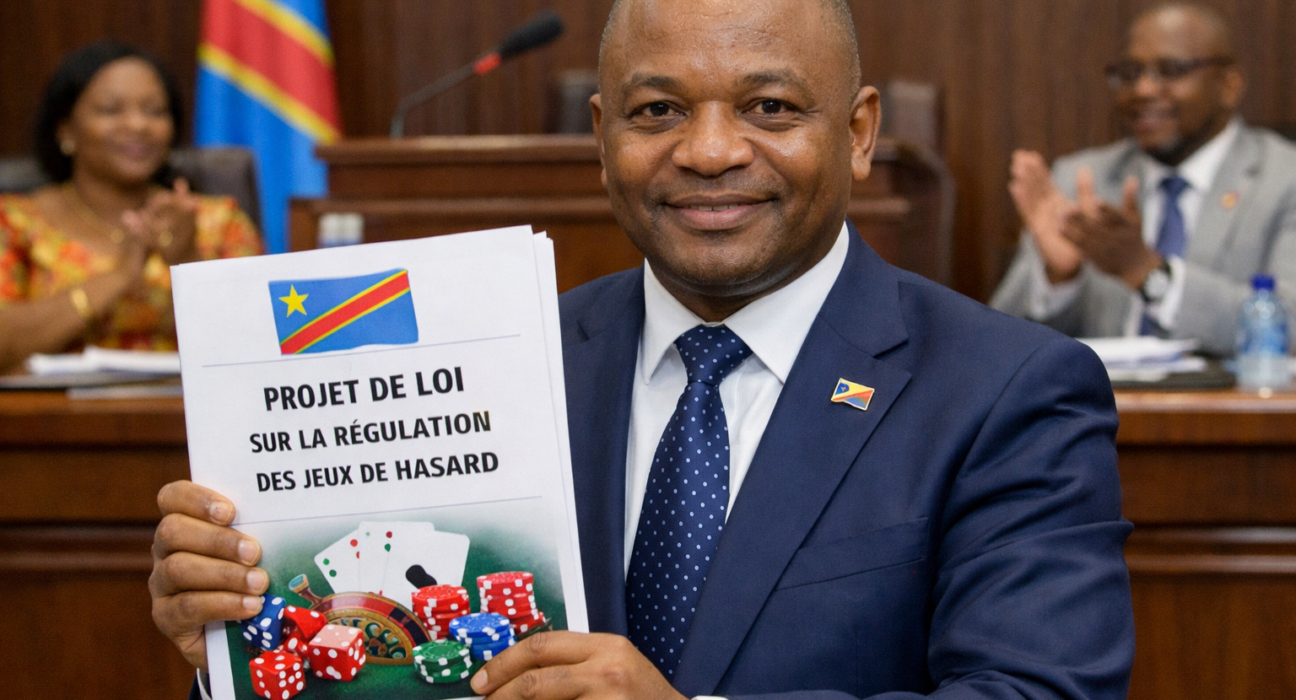
New Legislative Proposal Targets Gambling Sector Reform
A new legislative proposal aimed at tightening control over the gambling industry has been introduced in the National Assembly of the Democratic Republic of the Congo. The bill was tabled by Willy Mishiki, who is seeking to modernise the country’s regulatory framework for gambling activities. The proposal focuses on strengthening supervision of betting companies, improving transparency in the sector, and ensuring that the government receives a fair share of revenue generated by gaming operators.
According to Mishiki, the current legal structure governing gambling in the country is outdated and does not effectively address the rapid growth of sports betting, lotteries, and online gaming platforms. The new bill aims to close regulatory gaps and bring the industry in line with modern financial and compliance standards.
Improving Transparency and Revenue Collection
One of the primary objectives of the proposed legislation is to enhance financial transparency within the gambling industry. Authorities believe that significant amounts of revenue generated by gaming activities currently escape proper taxation due to limited monitoring systems. By introducing stronger oversight mechanisms, the government hopes to ensure that operators accurately report their earnings and comply with tax regulations.
The bill proposes systems that would allow regulators and tax authorities to monitor gambling transactions more effectively. This approach could help the government recover substantial revenues that might otherwise remain outside the formal financial system.
New Tax Measures for Gambling Operators
The legislation also introduces the idea of implementing a tax on gambling revenues. Mishiki has suggested a 5% tax on income generated by gambling activities, including sports betting and lottery operations. This measure is expected to generate additional funding for the government while also encouraging greater accountability among gaming operators.
Officials believe that the funds generated through the new tax could support public services and development initiatives in the country. By formalising the sector and introducing structured taxation, the government aims to turn gambling into a more reliable contributor to national economic growth.
Addressing Financial Crime and Illicit Activities
Another important component of the bill focuses on preventing financial crimes linked to gambling operations. The proposed law includes provisions designed to combat money laundering and other illicit financial practices that may occur within the gaming industry.
Strengthening regulatory oversight would help authorities track suspicious financial activity and ensure that operators comply with international anti-money laundering standards. This move is also expected to improve the country’s financial credibility and align its policies with global regulatory practices.
Protecting Players and Vulnerable Groups
Beyond financial regulation, the bill also highlights the need to protect consumers from the potential risks associated with gambling. Measures aimed at preventing underage gambling and promoting responsible gaming practices are included in the proposal.
Lawmakers believe that stronger consumer protections will help minimise gambling-related harm while ensuring that the industry operates responsibly. If approved, the legislation could significantly reshape the gambling landscape in the Democratic Republic of the Congo by introducing clearer rules, stronger oversight, and improved safeguards for both the government and the public.
















2 Comments