



National Lottery Board and Gambling Regulatory Authority to operate under separate but complementary mandates as Kenya prepares to launch its first National Lottery
Kenya is moving closer to establishing its first National Lottery, with the National Lottery Board (NLB) clarifying how its responsibilities differ from those of the Gambling Regulatory Authority (GRA).
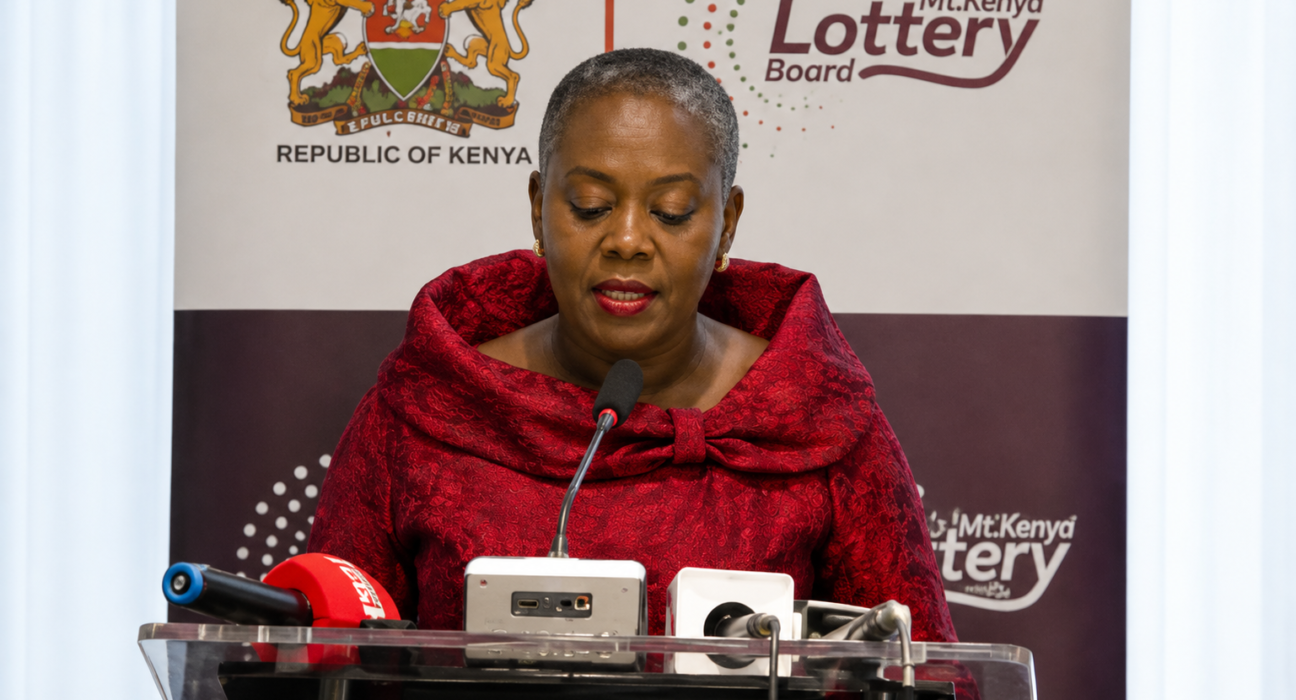
The clarification comes as preparations for the National Lottery continue and follows growing interest in how the two institutions will share responsibility for overseeing the new lottery. NLB Chairperson Dr. Farida Karoney, EGH, explained that the mandates of the two bodies are separate but complementary, with each institution serving a distinct function within Kenya’s gaming framework.
NLB Has a Dedicated National Lottery Mandate
The National Lottery Board was established under Kenya’s National Lottery Act, 2023. Its primary responsibility is to establish, oversee and safeguard the National Lottery.
The Board is also responsible for procuring and contracting the National Lottery operator and administering the National Lottery Fund, through which proceeds from the lottery will support legally designated public-good causes.
Dr. Karoney has described the NLB as the custodian of the National Lottery on behalf of the Kenyan people. This places the Board at the centre of ensuring that the lottery fulfils its intended public purpose while maintaining appropriate standards of integrity, accountability and responsible gaming.
GRA Responsible for Wider Gambling Regulation
The Gambling Regulatory Authority, meanwhile, has a broader responsibility across Kenya’s gambling industry.
Established under the Gambling Control Act, 2025, the GRA is responsible for regulating activities including betting, casinos, commercial gaming and lotteries.
This means the GRA’s role extends across the wider gambling market, rather than focusing exclusively on the National Lottery.
The distinction is important because the future National Lottery operator will have to comply with the national gambling regulatory framework administered by the GRA while also maintaining a contractual relationship with the NLB.
A Dual-Oversight Structure
The division of responsibilities effectively creates a dual-oversight model for Kenya’s National Lottery.
Under the proposed structure, the operator will be licensed and supervised by the GRA in accordance with national gambling regulations. At the same time, it will remain contractually accountable to the NLB for the performance and integrity of the National Lottery.
The Board will therefore focus on the National Lottery’s specific mandate, including its operation, contractual performance and public-interest objectives, while the GRA will ensure that the operator complies with the broader requirements governing gambling in Kenya.
The arrangement is intended to prevent confusion between regulatory oversight and stewardship of the National Lottery.
National Lottery Fund to Support Good Causes
A central element of Kenya’s National Lottery is its public-benefit purpose.
The National Lottery Fund is expected to channel proceeds towards approved good causes, creating a mechanism through which lottery participation can contribute to national development.
The NLB’s wider mandate includes safeguarding these proceeds and ensuring that the National Lottery remains aligned with its intended public purpose. The Board has emphasised transparency and accountability in the management of lottery proceeds.
Potential areas for support include charitable and humanitarian initiatives, economic empowerment, sports, arts and culture, national heritage, health, education and emergency response.
This public-interest dimension distinguishes the National Lottery from ordinary commercial gambling products operating in Kenya.
Procurement of National Lottery Operator Underway
The clarification of institutional roles comes as Kenya progresses with preparations to select its first National Lottery operator.
The NLB has appointed a consortium led by RSM Eastern Africa and QLOT Consulting as transaction advisers to support the procurement process.
The Board has opted for a concession model under which a single National Lottery operator will be selected to design, finance, implement and operate the lottery while the NLB retains strategic oversight and responsibility for protecting the public interest.
The procurement process is therefore expected to play a major role in determining how successfully the National Lottery is launched and operated over the long term.
Regulation and Stewardship Kept Separate
The distinction between the NLB and GRA is designed to provide greater clarity within Kenya’s emerging gambling framework.
The NLB will act as the dedicated steward of the National Lottery, while the GRA will provide sector-wide regulatory oversight.
This separation allows the National Lottery to maintain its specific public-service objectives without removing it from the broader gambling regulatory system.
The approach is also reflected in Kenya’s Gambling Control (National Lottery) Regulations, 2026, which provide detailed requirements covering the licensing and operation of the National Lottery and help clarify how the two institutions exercise their respective mandates.
Responsible Gaming Remains Important
As Kenya prepares to launch the National Lottery, responsible gaming will remain an important part of the framework.
The NLB has stated that the National Lottery should operate with integrity and protect players, while the wider regulatory framework provides requirements for responsible gambling, compliance and player protection.
The new regulatory environment is intended to ensure that technological development and commercial growth do not come at the expense of consumer safeguards.
Cooperation Between State Institutions
Although the NLB and GRA have different mandates, the two institutions are expected to work closely with each other, the responsible government ministry and other state agencies.
Such cooperation will be important as Kenya moves from establishing the institutional framework to actually launching and operating the National Lottery.
Clear communication between the institutions should also help operators, consumers and other stakeholders understand which authority is responsible for particular aspects of the market.
Kenya Moves Toward Its First National Lottery
The clarification of the NLB and GRA’s respective responsibilities comes at a significant point in Kenya’s gambling-sector development.
With the procurement of the National Lottery operator progressing and the supporting regulatory framework now taking shape, Kenya is building the institutional structure required to introduce its first National Lottery.
The model separates National Lottery stewardship from wider gambling regulation, while ensuring that the two functions remain connected.
For the NLB, the priority will be ensuring that the National Lottery delivers its intended public benefits and operates with integrity. For the GRA, the focus will remain on licensing, compliance and regulation across Kenya’s broader gambling sector.
Together, the two institutions are expected to provide the framework through which Kenya’s National Lottery can develop as a regulated, responsible and public-focused national gaming instrument.










3 Comments