



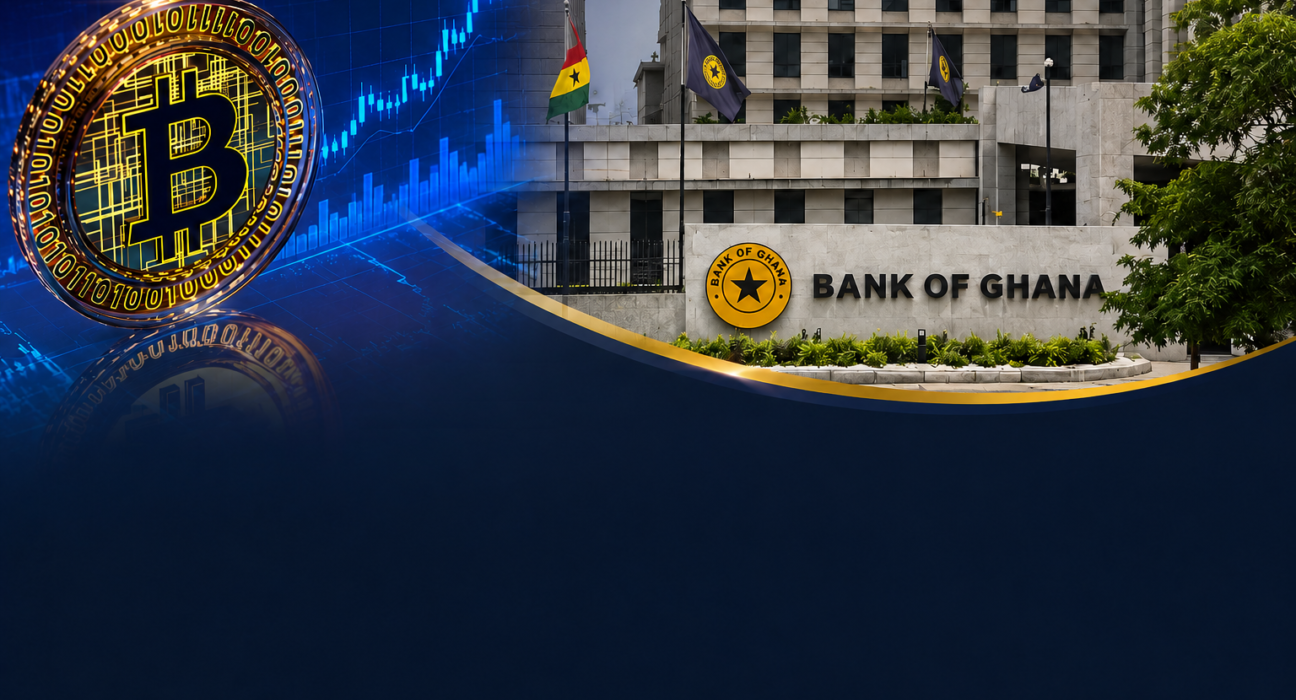
Central bank joins Digital Assets Summit Africa 2026 to promote balanced cryptocurrency regulation, blockchain adoption, and collaboration across the African fintech ecosystem
The Bank of Ghana (BoG) has entered into a strategic partnership with the Digital Assets Summit Africa (DASA) 2026, underscoring the country’s growing commitment to fostering responsible innovation in the digital asset sector. The collaboration is expected to strengthen dialogue between regulators, financial institutions, technology companies, and policymakers as Ghana continues to develop a regulatory framework for cryptocurrencies and blockchain-based financial services.
The partnership positions the Bank of Ghana as a key stakeholder in one of Africa’s leading digital finance events, where discussions will focus on the opportunities and challenges presented by cryptocurrencies, tokenized assets, decentralized finance (DeFi), and emerging payment technologies.
As digital assets gain momentum across Africa, the initiative reflects a broader recognition that effective regulation and innovation must progress together to support sustainable growth and financial stability.
Strengthening Dialogue Between Regulators and Industry
Through its participation in DASA 2026, the Bank of Ghana aims to encourage closer collaboration between the public and private sectors. The summit will provide a platform where regulators, fintech companies, blockchain developers, investors, academics, and policymakers can exchange ideas on the future of digital finance across the continent.
By engaging directly with industry participants, the central bank hopes to gain valuable insights into technological developments while ensuring that regulatory approaches remain practical and responsive to market evolution.
The partnership also demonstrates Ghana’s willingness to adopt a collaborative approach rather than a restrictive one as digital financial services continue to expand.
Advancing Balanced Crypto Regulation
One of the primary objectives of the collaboration is to support the development of balanced regulatory frameworks that promote innovation without compromising financial stability or consumer protection.
As cryptocurrencies become increasingly integrated into global financial systems, regulators face the challenge of encouraging technological advancement while addressing risks such as fraud, money laundering, cybercrime, and market volatility.
The Bank of Ghana has consistently emphasized the importance of creating regulations that foster confidence in digital financial services while maintaining compliance with international anti-money laundering (AML) and counter-terrorism financing (CTF) standards.
Participation in DASA 2026 is expected to contribute to these ongoing regulatory efforts by facilitating knowledge exchange with experts from across Africa and beyond.
Exploring Emerging Financial Technologies
The summit will feature discussions on several areas shaping the future of financial services, including blockchain technology, digital payments, stablecoins, tokenization, decentralized finance, cross-border payment infrastructure, and central bank digital currencies (CBDCs).
These technologies are increasingly viewed as important tools for improving payment efficiency, reducing transaction costs, expanding financial inclusion, and supporting economic development.
For Ghana, participation in these discussions aligns with broader efforts to modernize the country’s financial ecosystem through innovation and digital transformation.
The Bank of Ghana has already demonstrated interest in exploring emerging payment technologies, making its involvement in DASA 2026 a natural extension of these initiatives.
Supporting Ghana’s Digital Economy
The partnership complements Ghana’s wider national strategy to accelerate digital transformation and strengthen its position as one of Africa’s leading fintech markets.
The country has witnessed significant growth in mobile money adoption, digital payments, and financial technology innovation over the past decade. As consumer demand for digital financial services continues to increase, policymakers are seeking regulatory frameworks capable of supporting innovation while preserving confidence in the financial system.
By participating in DASA 2026, the Bank of Ghana aims to contribute to policies that encourage responsible innovation while ensuring that new technologies remain accessible, secure, and sustainable.
Building Regional Cooperation
Beyond Ghana, the collaboration highlights the growing importance of regional cooperation in digital asset regulation. Many African countries are currently developing policies governing cryptocurrencies and blockchain technologies, creating opportunities for regulators to share experiences and coordinate best practices.
DASA 2026 is expected to facilitate these conversations by bringing together representatives from central banks, regulatory authorities, financial institutions, and technology companies across the continent.
Greater cooperation could help promote regulatory consistency, encourage cross-border innovation, and strengthen Africa’s role in the global digital economy.
Looking Ahead
The Bank of Ghana’s partnership with DASA 2026 represents another important step in the country’s evolving approach to digital finance. Rather than viewing cryptocurrencies solely as a regulatory challenge, the collaboration reflects a broader understanding that innovation and effective oversight must develop side by side.
As digital assets continue to reshape financial services, initiatives such as DASA 2026 will play an increasingly important role in helping governments, regulators, and industry leaders navigate a rapidly changing landscape.
Through active engagement, knowledge sharing, and collaborative policymaking, the Bank of Ghana aims to help create an environment where innovation can flourish while maintaining the stability, transparency, and consumer protections necessary for the long-term growth of Africa’s digital financial ecosystem.










1 Comment