

Expanded World Cup format and strong ticket demand fuel unprecedented spectator numbers
The FIFA World Cup 2026 has achieved a major milestone just six days into the tournament, breaking long-standing attendance records and reinforcing its status as the biggest edition of the competition in football history.
According to figures released by FIFA, the tournament welcomed more than 1.3 million spectators during its opening six days, with attendance levels exceeding expectations across host venues in the United States, Canada, and Mexico. The impressive start has placed the competition firmly on course to surpass previous World Cup attendance records before the group stage concludes.
The achievement highlights the extraordinary global appeal of the first FIFA World Cup to feature 48 teams and 104 matches, significantly expanding the scale of the tournament compared to previous editions.
Single-day attendance record falls
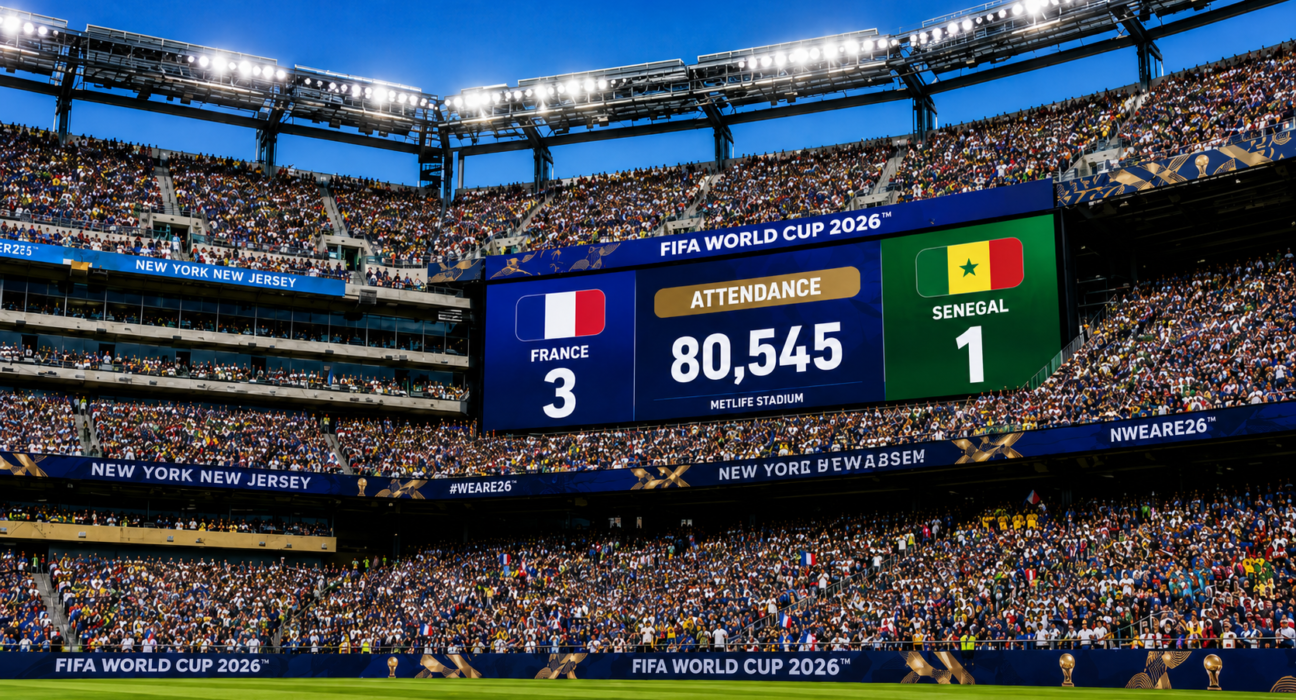
One of the most notable milestones came on June 16, when a combined crowd of 281,223 spectators attended four group-stage matches in a single day. The figure surpassed the previous record of 277,070 fans set during the 1994 FIFA World Cup in the United States.
The record-breaking day featured several high-profile fixtures, including France versus Senegal and Argentina versus Algeria, drawing large crowds and creating vibrant atmospheres across multiple venues.
FIFA President Gianni Infantino hailed the achievement as a historic moment for the competition, describing the tournament’s early attendance figures as evidence of football’s continued ability to unite supporters from around the world.
More than 1.3 million fans through the gates
The tournament’s cumulative attendance reached approximately 1.31 million spectators after just six days of action, with matches averaging more than 65,000 fans per game. These figures place World Cup 2026 ahead of previous tournaments at the same stage and strengthen expectations that additional records will fall as the competition progresses.
Earlier in the tournament, FIFA announced that the competition had already surpassed one million spectators within its first five days, demonstrating strong ticket demand across all three host nations.
Industry analysts note that attendance rates have remained exceptionally high despite the tournament’s expanded schedule and increased number of matches.
Tournament on track to eclipse historic 1994 benchmark
The current all-time World Cup attendance record stands at approximately 3.5 million spectators, a mark established during the 1994 tournament in the United States. FIFA now believes the 2026 edition is firmly on course to surpass that figure well before the tournament reaches its final stages.
The combination of larger stadiums, increased match inventory, and widespread global interest has created conditions for what could become the most attended sporting event in football history.
Ticket demand has remained robust throughout the opening phase, with millions of tickets sold ahead of the tournament and additional inventory continuing to attract fans from around the world.
Expanded format delivers larger audiences
World Cup 2026 is already historic due to its expanded structure. The tournament features 48 national teams for the first time, increasing the total number of matches from 64 to 104 and creating more opportunities for supporters to attend games.
The three-host-nation format has also contributed to strong attendance figures, with matches taking place across some of North America’s largest sporting venues.
In addition to attendance success, the tournament has generated record-breaking television audiences, reflecting growing engagement both inside stadiums and across global broadcast platforms.
A World Cup already making history
With more than a month of football still remaining, World Cup 2026 is rapidly establishing itself as one of the most successful tournaments ever staged.
From record-breaking crowds to unprecedented global interest, the competition has demonstrated the enduring popularity of international football and the commercial strength of the World Cup brand.
As the group stage continues and knockout matches approach, organizers are increasingly confident that the tournament will set new benchmarks for attendance, viewership, and fan engagement, further cementing its place in football history.